As climate disasters surge, P&C insurers also face a ‘perfect storm’ of rising costs, restrictions, and talent attrition—eroding client trust and demanding a quick response to prevent the walls from caving in on insurers. Beneath the buzz around AI and efficiency lies the answer to the industry’s problems: compassionate, human-centered support that acknowledges the full scale of damages policyholders endure in the wake of material injury or loss.
Whether someone has lost their home, their vehicle, or their business, the emotional impact can be significant—undermining their sense of safety, security, and confidence in themselves and their future. For insurers hoping to get back in clients’ good graces, compassionate support in these moments is crucial. By demonstrating genuine care and concern, insurers reinforce their promise to protect—even when full compensation or a swift resolution isn’t feasible.
As the risk landscape continues to evolve—restricting what insurers can reasonably cover—support for the non-economic, or human, toll of loss emerges as a way to still deliver value while reducing downstream costs by easing clients’ stress and restoring their sense of stability, agency, and trust.
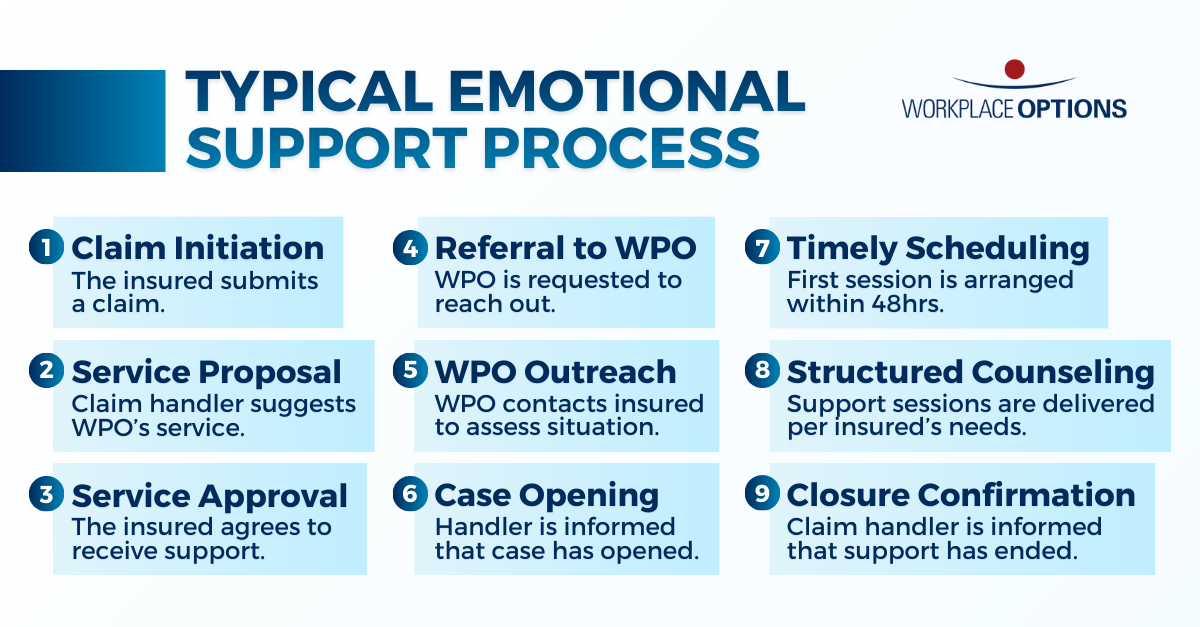
With the help of Workplace Options (WPO), P&C insurers can deliver the human-centric care policyholders need to feel protected and heard—from emotionally intelligent claims professionals to trauma-informed counselors who offer timely emotional and practical support to help policyholders recover, rebuild, and resolve claims faster after a loss.
Helping Policyholders Heal with Presence
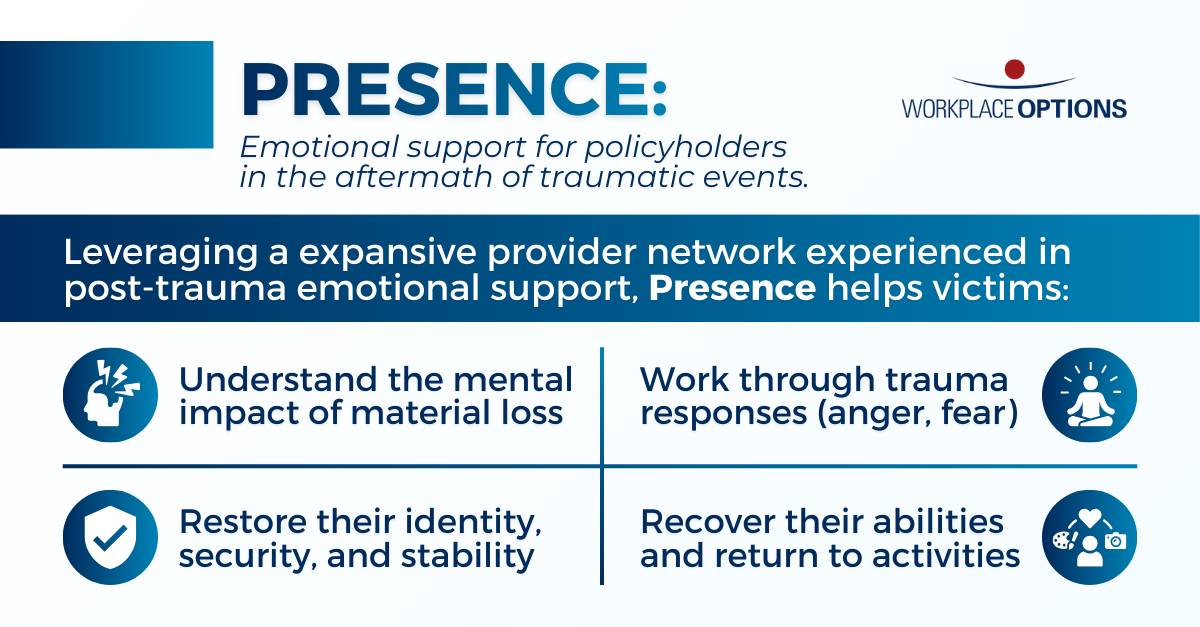
In response to the rise in emotionally charged and high-stakes claims, Presence was developed as a value-added insurance solution providing vital psychological support to policyholders reeling from a traumatic injury or loss.
In the wake of a traumatic event such as a car accident, burglary, or fire, the intense emotional responses policyholders may experience—as well as their somatic counterparts—can undermine not only their recovery but their ability to repair and rebuild on their own. For insurers, the potential consequences are clear, as unprocessed trauma can lead to an overestimation of loss, unrealistic expectations regarding what the insurer can achieve, and an irrevocably dissatisfactory experience—to say nothing of litigation—as any financial compensation awarded fails to account for clients’ emotional injuries.
Alternatively, by connecting distressed policyholders with seasoned trauma professionals who can help them regain the emotional balance and clarity of mind needed to navigate both the claims and healing process, carriers can ensure they return to the conversation ready to accept a more practical resolution while already feeling satisfied with the level of psychosocial care received.
As new survey data shows, this is precisely the type of support clients are looking for in these moments—more than renumeration or efficient claims handling. In an analysis of more than 25,000 claims survey responses, for instance, it was found that adjuster empathy—or lack thereof—was the primary driver of both high and low customer satisfaction ratings, outweighing timeliness of service, clarity of communication, and even process effectiveness.
What this suggests is that financial compensation matters less—or at least counts for less without that emotional component addressed. Policyholders understand that insurance is a business like any other, with limits to what the insurer can reasonably offer, at least monetarily, to every customer. It’s not about matching their loss dollar for dollar, but providing the all-around support they need to feel heard and empowered to get back on their feet.
Training Claims Teams for Empathetic Service
In light of this, WPO also offers bespoke training for claims professionals to help them understand and assess the traumatic impact of severe claims and engage effectively with victims.
As another study recently observed, when customers clearly understand decisions and feel they are treated with transparency and respect, trust remains strong regardless of financial outcomes. This once again confirms that policyholders care less about how agents negotiate with them as clients versus how well they treat them as people—creating an opportunity for insurers to increase the value of their policies through upskilling instead of overpaying.
During what are arguably the most profoundly vulnerable moments of their lives, policyholders aren’t looking solely for remittance; what they want is reassurance. No amount of money can assure someone that they’ll find another house that feels like home, or that the pain they’re experiencing now will eventually give way to newfound peace of mind. Such reassurances can only come from deeply meaningful human interactions—with compassionate and emotionally intelligent agents on the other side who have seen similar cases before and can attest from experience that everything will turn out right.
To ensure agents are equipped to handle not only the technical but the interpersonal aspect of the claims process, WPO’s training focuses on helping agents:
- Nurture situational awareness – identifying emotionally charged situations and psychologically distressed victims
- Deploy trauma-informed communication techniques – including active listening, paraphrasing, verbal acknowledgements, neutral body language, and soft tones to ensure clients feel safe, seen, and heard
- Act as the empathetic anchor and decision-maker – guiding clients toward a fair and timely resolution and clear path to recovery, referring them to the Presence service as necessary
- Maintain a transparent and trusted relationship – ensuring clients understand what is happening, what to expect, and the reasoning behind all assessments and determinations
This ensures a dignified and high-quality customer experience, wherein regardless of the settlement amount, policyholders feel valued, respected, and well supported.
Human-Centered Support is the Path Forward
As insurers continue to rethink their approach to customer service in the face of rising premiums, tightening restrictions, and growing public hostility, compassionate, human-centric support emerges as a clear path forward. It shows that insurers are listening, that they empathize with what policyholders are going through, and that they are committed to getting them back on track as best they can.
As Christian Mainguy, Senior Global Consultant at WPO, explains, “Empathy has become a highly sought-after commodity in today’s era of automated service. Insurers that provide person-centered support will increasingly outperform competitors that focus solely on efficiency at the expense of human connection.”
“90 percent of beneficiaries who have engaged with Presence recommend it, resulting in a Net Promoter Score above 88. That’s the impact positive human interactions can have on the client experience.”
Discover how Workplace Options can help you transform your customer experience for the better—and offer the quality of care your policyholders deserve. Connect with us today to learn more.