Psychosocial risks can arise in organizations across the globe, affecting both employees and business outcomes. Understanding what these risks are, how to manage them effectively, and strategies for prevention is essential for creating a healthy and productive work environment. Left unaddressed, psychosocial risks can lead to reduced performance, low motivation, disengagement, fatigue, and even mental health issues.
In a recent workshop, senior leaders Andrew Maher, Director of Clinical Service Delivery at Workplace Options (WPO), and Jonathan Gawthrop, Executive Director of Safety, Quality, and Risk at EMCOR UK, shared their insights on the critical psychosocial risk factors that senior leadership should be aware of. Their discussion highlighted the importance of proactive leadership in identifying and mitigating these risks before they escalate.
Psychological Safety and Psychological Risks
“Psychological safety is a belief where you can express your thoughts, ideas, concerns, and mistakes without the fear of negative consequences to our own self-image or status. It is where the team feels safe for interpersonal risk-taking and individuals can feel respected and accepted,” says Andrew Maher.
By embracing the key elements of trust, openness, collaboration, and risk-taking, organizations can lay the foundation for psychological safety and set the stage for individual and collective success. Creating an environment where employees feel safe to grow and embrace learning is crucial for supporting their long-term development and minimizing psychological risks throughout their careers.
Unlike psychological safety, which fosters a healthy and supportive work environment, psychosocial risks represent the harmful consequences that arise when such safety is not prioritized. Alarmingly, six in ten employees report heightened workplace stress, a trend that can be partly attributed to the presence of these unmanaged psychosocial risks.
Andrew Maher continues, “Psychosocial risks are a likelihood that one or more workers will suffer psychological damage which may or may not be combined with physical or social damage as a result of the exposure to a work situation which entails a risk.”
Psychosocial risks can take many forms and pose serious harm not only to employees but also to organizations. These psychosocial risks often stem from poor job design, ineffective organizational structures, inadequate management practices, and a negative social work environment. If left unaddressed, they can lead to a range of psychological, physical, and social outcomes.
In the webinar, Jonathan Gawthrop defines psychosocial risks as how individuals interact with and are affected by the work environment. He emphasizes that the key word in understanding and addressing these risks is ‘environment,’ as it plays a central role in both the development and management of psychosocial hazards.
Building Psychological Safety in the Workplace
Andrew Maher goes on to explain that psychological safety is a feeling which allows employees to act and behave in a certain way. He states, “It is really that connection between thought, feeling, and behavior. If I feel safe, I will behave in a particular way.”
Creating psychological safety in the workplace involves implementing strategies such as:
- Cultivating open communication
- Supportive leadership
- Respect and inclusion
- Constructive feedback
- Collaboration and teamwork
- Encouraging experimentation
- Clear roles and expectations
Jonathan Gawthrop emphasizes the importance of ensuring that everyone feels heard and empowered to contribute to a workplace where constructive feedback and collaboration are met with openness and respect. By doing so, psychological safety can be implemented and ensured for a healthy work environment.
During the workshop, Andrew Maher and Jonathan Gawthrop emphasized that while implementing these strategies is essential, it’s equally important to understand three key principles that support the development of psychological safety in the workplace:
- Prioritize employee wellbeing
- Cultivate strong relationships
- Consistently demonstrate trust and respect
These key points help express the importance of employee wellbeing in the workplace. By pushing for these factors, organizations have the ability to manage psychological and psychosocial risks in the workplace overall.
How Psychological Risks Impact an Individual and Organization
Andrew Maher lists several ways that psychological risks can impact the individual including:
- Lack of work-life balance
- Chronic physical aliments
- Relationship conflicts
- Anxiety and stress
- Absenteeism and presenteeism
- Harassment, discrimination, and bullying
- Desire to commit harm to self, others, or the workplace
- Depression
- Accidents
- Burnout
- Addiction
Psychosocial risk factors focus on the individual’s emotional wellbeing. Any and all of these risks can arise in any individual around the world working without the support of the organization or leadership.
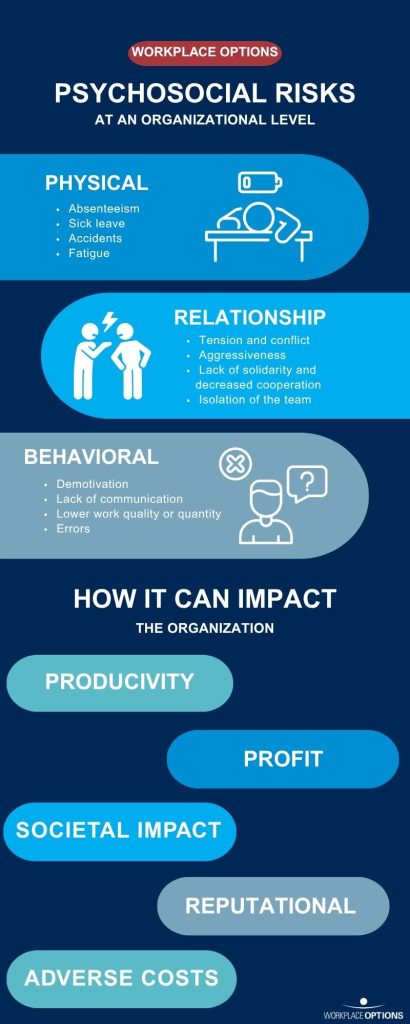
Beyond the individual level, organizations play a significant role in shaping psychosocial risks. A variety of organizational factors ranging from physical workplace conditions to the quality of interpersonal relationships can influence employees’ psychological wellbeing.
Organizations should not only address psychosocial risks affecting employees but also consider how these risks impact the organization as a whole. Factors such as productivity, profitability, reputation, social responsibility, and potential financial costs are all influenced by the psychological wellbeing of the workforce.
Psychosocial risks are a serious concern and must be proactively managed to prevent them from taking root and escalating within an organization. Recognizing the risks and understanding warning signs are essential first steps in creating a safer, healthier work environment.
To help better understand psychosocial risks for your organization, use the WPO risk screener to learn more on how to manage and prevent hazards.